Equine Osteopathy

Equine osteopathy is a gentle, hands-on therapy that supports the health, comfort, and performance of your horse. By assessing the whole body, it aims to identify and address underlying restrictions that may be contributing to pain, reduced mobility, or changes in behaviour.

Each treatment is tailored to the individual horse, taking into account their history, workload, and environment.

What is Equine Osteopathy? 

Helping horses achieve their full potential through professional, results-driven osteopathic care.

Whether your horse is a competitive athlete or a valued companion, treatments are designed to:

• Restore mobility and movement quality
• Alleviate pain and discomfort
• Improve performance and coordination
• Support recovery following injury
• Enhance overall well-being and longevity

A calm and thorough approach ensures each horse is treated with care and respect, supporting long-term management of pain, imbalance, and reduced performance.

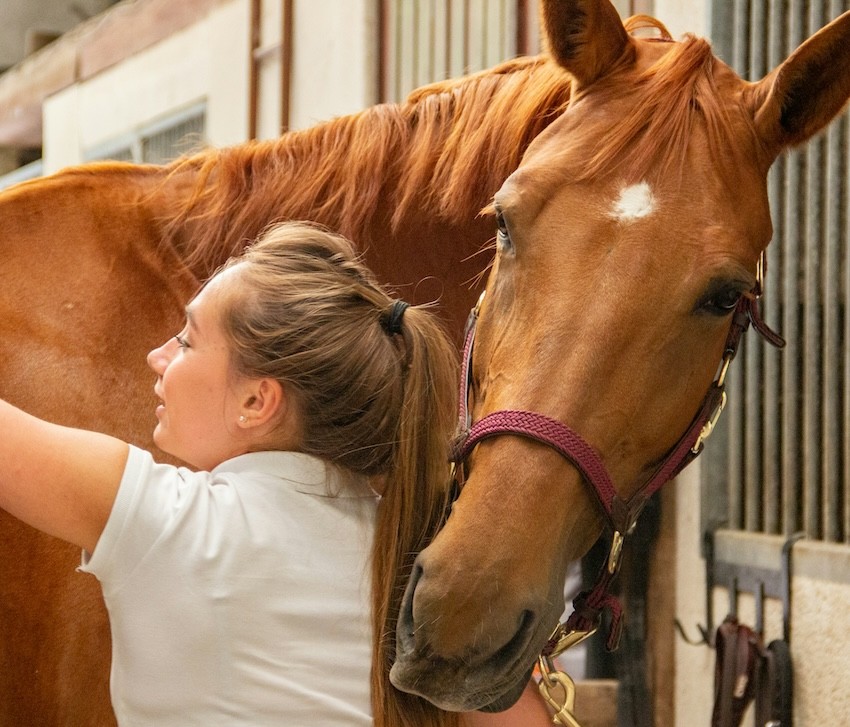
Women going through treatment

Treatment Benefits 

Osteopathic treatment is most effective when viewed as part of an ongoing approach to your horse’s health and wellbeing, rather than a one-off intervention.

While some horses show improvement after an initial session, multiple treatments are often required to achieve optimal and lasting results. This allows the body time to adapt, rebalance, and maintain positive changes.

Regular maintenance treatments can also play an important role in preventative care, helping to:

  • Support consistent performance
  • Reduce the risk of injury
  • Maintain mobility and comfort
  • Identify and address minor issues before they develop further

Treatment plans are tailored to each individual horse, depending on their needs, workload, and response to care.

Women going through treatment

A Holistic Approach 

Osteopathy takes a whole-body approach, recognising that no part of the body works in isolation.

By assessing the entire system, we aim to identify contributing factors to dysfunction rather than simply treating symptoms—supporting long-term management of pain, imbalance, and reduced performance.

Horse & Rider Care

Horse and rider function as a deeply interconnected partnership. Imbalances or asymmetries in one can directly influence the other.

By understanding this relationship, treatment can support improved balance, communication, and harmony—allowing both horse and rider to perform at their best.

Women going through treatment

Techniques Used

My osteopathic training encompassed a wide range of techniques, from structural adjustments to more subtle approaches. I primarily work with cranial and functional techniques, which are gentle, effective, and generally well-received by both horses and humans.

Cranial Techniques

Subtle, hands-on techniques that work with the body’s natural rhythms to release tension and support nervous system balance.

Myofascial Techniques

Address restrictions within the fascia (connective tissue), improving mobility, circulation, and overall tissue health. Myofascial techniques are thought to work through a combination of mechanical and neurophysiological effects. Gentle sustained loading of fascial tissues may influence tissue hydration, fascial gliding, fibroblast activity, and mechanoreceptor stimulation. These effects may help reduce protective muscle tension, improve movement, modulate pain sensitivity, and support more efficient movement patterns.


For a link to more detailed information on how myofascial techniques work, please click here

Frontiers | Myofascial release and fascial-targeted mechanical interventions in musculoskeletal rehabilitation: mechanisms, modalities, and integrative physiology

Balanced Ligamentous Tension (BLT)

A gentle technique that supports the body in finding its own point of balance, helping reduce tension and strain within the body. Balanced Ligamentous Tension techniques are thought to work by restoring balanced tension through the ligaments and associated fascial structures surrounding a joint. Osteopathic theory proposes that ligaments play an important proprioceptive role in guiding joint motion and muscular coordination. By positioning the joint into a point of balanced tension, abnormal protective patterns may be reduced, allowing improved mobility, decreased pain sensitivity, and more efficient neuromuscular function.


For a link to more detailed information on how balanced ligamentous tension (BLT) techniques work, please click here

https://pmc.ncbi.nlm.nih.gov/a...


Functional Techniques

Work with the body’s preferred movement patterns to ease restrictions and restore natural function. Functional osteopathic techniques are indirect treatment approaches that position tissues into a state of ease and balanced tension rather than pushing into restriction. These techniques are thought to reduce abnormal proprioceptive and protective neuromuscular activity, improve circulation and tissue mobility, and allow the body’s inherent self-regulatory mechanisms to restore more efficient movement and function.


For a link to more detailed information on how functional techniques work, please click here

https://pmc.ncbi.nlm.nih.gov/a...

Working Alongside Your Veterinarian

Your horse’s safety and well-being are always my top priority.

If, during assessment or treatment, I identify any concerns that may require further investigation, I will recommend that you consult your veterinarian before proceeding. This ensures your horse receives the most appropriate care and that osteopathic treatment is safe and suitable.

I am committed to working collaboratively with your vet and other professionals to support the best possible outcome for your horse.

Women going through treatment

Benefits of Equine Osteopathy

Equine osteopathy can provide a wide range of benefits, including:

  • Alleviating pain and stiffness
  • Enhancing performance
  • Improving joint mobility and flexibility
  • Restoring musculoskeletal balance
  • Reducing injury risk through improved posture
  • Supporting comfort and ease of movement
  • Supporting the body’s natural recovery processes
  • Helping identify physical contributors to behavioural changes

When to Consider Osteopathy for Your Horse

When to Consider Osteopathy for Your Horse

You may wish to consider treatment if your horse shows:

  • Stiffness, reduced suppleness, or restricted movement
  • Postural abnormalities or uneven muscle development
  • Sensitivity to touch, girthiness, or general discomfort
  • Irregular gait, toe dragging, or lameness
  • Performance issues (e.g. disuniting, refusing jumps, inconsistent contact)
  • Recurrent injuries or strains
  • Behavioural changes (e.g. bucking, rearing, bolting, resistance)
  • Recovery following surgery or injury
  • Respiratory or digestive concerns
  • Signs associated with ageing or degenerative conditions

This list is not exhaustive—please feel free to get in touch to discuss your horse as an individual.

Women going through treatment

Horse & Rider Osteopathy

As a qualified equine and human osteopath, I understand that horse and rider function as a connected system. Imbalances in one can influence movement, comfort, and performance in the other.

I offer combined horse and rider sessions to address this relationship directly, helping to identify and resolve underlying issues affecting your partnership.

Benefits of Combined Treatment

  • Holistic approach
  • Treats horse and rider as a unified system
  • Identifies and addresses imbalances
    Corrects asymmetries and compensation patterns in both
  • Optimises performance
    Enhances comfort, movement, and effectiveness
  • Improves communication and harmony
    Supports a stronger, more connected partnership
  • Enhances coordination
    Promotes smoother, more balanced movement under saddle
  • Supports a synergistic partnership
    Encourages long-term balance and mutual well-being

Women going through treatment

For rider treatments, a suitable warm, dry, and private area is required.

For a link to a current research paper on horse and rider performance, please click here

https://www.frontiersin.org/jo...

Qualifications

With over 6 years of formal osteopathic training and more than 20 years of experience in natural horsemanship, I bring a depth of knowledge and practical understanding to every treatment.

  • Bachelor of Musculoskeletal Health (BMSK)
  • Postgraduate Diploma in Osteopathy
  • Diploma of Clinical Competence in Equine Functional Osteopathy

I work collaboratively with a network of equine and human health professionals to ensure a comprehensive approach to care.

Professional Registration

    Professional Registration

    I am registered with the Osteopathic Council of New Zealand (OCNZ).

    Registration Number: 22-01473

    Osteopathy is a regulated profession in New Zealand, and the title “osteopath” can only be used by fully qualified and registered practitioners.

Any Questions?

    If you would like to discuss whether osteopathy is suitable for your horse—or for you as a rider—please feel free to get in touch:

    virginia@koruwellness.co.nz

Women going through consultation

Services:


Equine Service

  • Service charge $150 per session, including travel within Canterbury

Horse & Rider Sessions

  • Service charge equine $150
  • Rider charge added and will depend on the service required.
  • See our normal treatment charges for details.
  • ACC subsidised appointments are available
  • Includes travel within Canterbury

Email virginia@koruwellness.co.nz to make a booking or phone 03 599 8050

Professional Disclaimer

Osteopathic treatment is a complementary therapy and does not replace veterinary diagnosis or care.

All horses must be under the care of a registered veterinarian for the diagnosis and management of medical conditions. If, during assessment or treatment, I identify any signs or symptoms that may indicate an underlying condition requiring veterinary attention, I will advise you to seek veterinary guidance before continuing treatment.

Treatment is provided based on information available at the time and is tailored to each individual horse. While every effort is made to support your horse’s comfort, mobility, and well-being, no guarantee of specific outcomes can be given.

By engaging in equine osteopathic treatment, you acknowledge that:

  • You are responsible for informing me of any known medical conditions, injuries, or veterinary diagnoses
  • Your horse is safe to handle and suitable for manual therapy
  • You consent to treatment being carried out in the best interests of your horse’s welfare

For rider treatments, osteopathy is provided as a manual therapy and does not replace medical advice from your GP or other healthcare providers.